
Stepping onto a modern commercial airliner reveals four entirely distinct travel experiences coexisting under one pressurized fuselage. But beyond the obvious price tag differences, what do you actually get when stepping up each tier?
With airlines continually re-engineering cabin interiors—blurring the lines with luxury “Qsuites”, lie-flat beds, and upgraded premium economy seats—deciding where to allocate your travel budget can be daunting. Here is the definitive, no-nonsense breakdown of the differences between Economy, Premium Economy, Business, and First Class.
Comparison Summary: Cabin Specifications at a Glance
1. Economy Class: The Budget-Friendly Workhorse
Economy class (often referred to as Main Cabin or Coach) is designed to maximize aircraft seating density while providing essential transportation. On short-haul domestic flights, expect standardized slimline seats with minimal recline and pay-as-you-go snacks.
However, on international long-haul flights (such as transpacific or transatlantic crossings), full-service carriers like Emirates, Singapore Airlines, and Delta include complimentary multi-course meals, seatback entertainment touchscreens with hundreds of movies, and blanket/pillow kits. If you’re on a tight budget, read our tactics on scoring cheap last-minute economy flights.
2. Premium Economy: The Savvy Traveler’s Sweet Spot
Premium Economy is not merely standard economy with extra legroom—it is a separate, dedicated cabin nestled between Economy and Business. For travelers who find business class prices prohibitive but dread cramped long-haul overnight journeys, Premium Economy offers exceptional value according to evaluations from Skytrax and the Airline Passenger Experience Association (APEX).
- Substantial Ergonomic Upgrade: A generous 38 inches of pitch (6 to 8 inches more than standard economy) with dedicated calf rests and deeper recline.
- Elevated Dining: Multi-course meals served on genuine china with real silverware and complimentary prosecco or wine.
- Priority Ground Perks: Priority check-in lanes, early boarding, and higher baggage allowances (usually two free checked bags up to 23kg each).
3. Business Class: The Pinnacle of Long-Haul Comfort
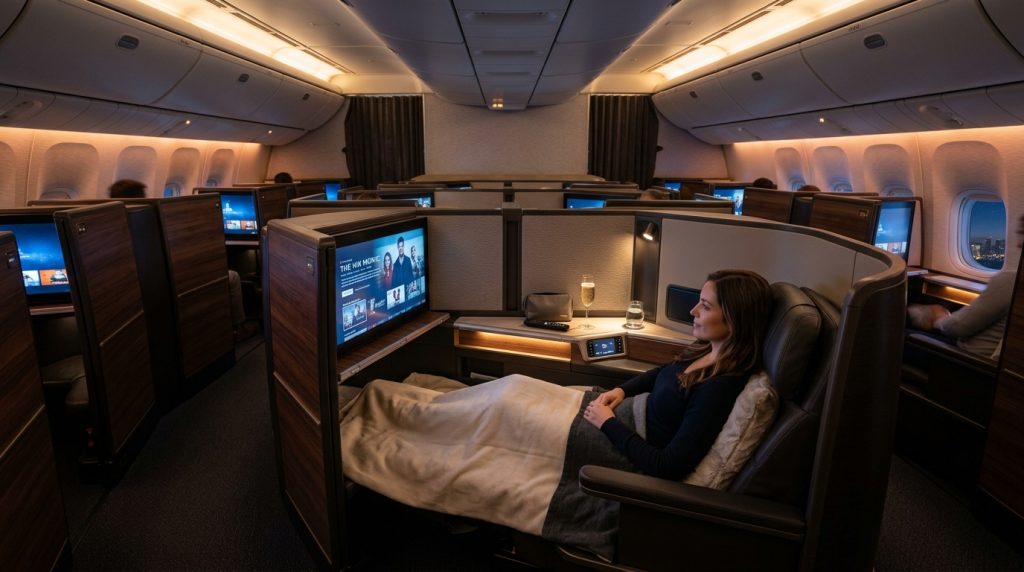
For international flights exceeding 6 hours, Business Class is a game-changer. The hallmark feature is the 180-degree lie-flat bed, allowing travelers to sleep horizontally and arrive at their destination refreshed rather than jet-lagged.
Leading international carriers have transformed business cabins with private sliding doors (such as Qatar Airways’ award-winning Qsuite and Delta’s Delta One Suite), direct aisle access for every passenger (1-2-1 configurations), chef-curated dine-on-demand menus, and full access to luxury airport departure lounges equipped with private showers and à la carte dining.
4. First Class: The Ultra-Luxury Frontier
While many airlines have phased out international First Class in favor of increasingly luxurious Business Class suites, flagship carriers like Emirates, Singapore Airlines, Air France (La Première), and Lufthansa maintain ultra-exclusive First Class cabins.
Here, flying transcends transportation into five-star hospitality: private single and double bedrooms, onboard shower spas at 40,000 feet on the Airbus A380, unlimited caviar service paired with vintage Dom Pérignon or Krug champagne, and dedicated tarmac transfers in luxury sedans (Porsche or Mercedes-Maybach).
When Is an Upgrade Actually Worth It?
Rule of Thumb: On daytime flights under 5 hours, Economy or Premium Economy is usually the smart financial pick. On overnight long-haul flights over 8 hours (e.g. New York to London or Los Angeles to Tokyo), Business Class lie-flat seating is worth the splurge if you must be productive the next morning.
Ready to explore flights across all four cabin classes? Head over to our flight booking engine to compare live fares and seat classes simultaneously.